质量以我为本,我以质量为荣
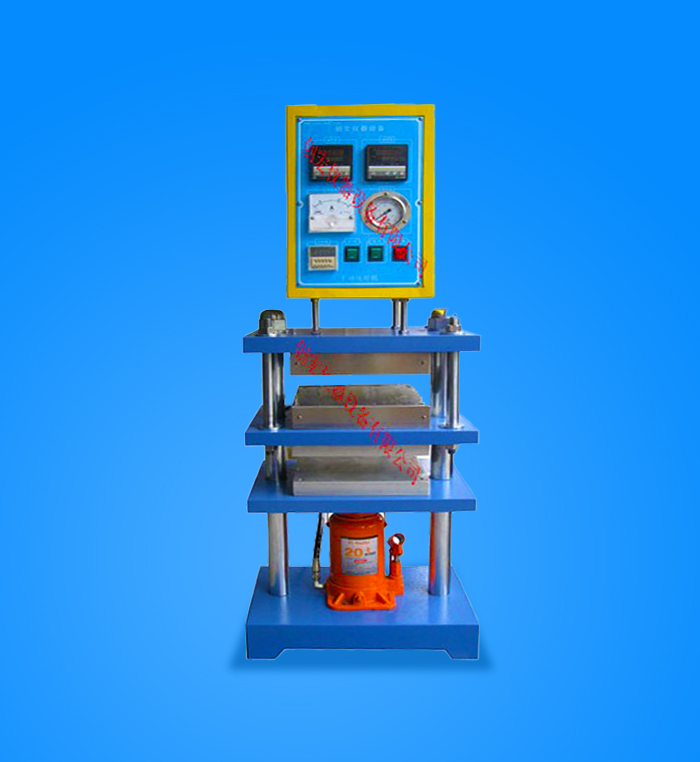
No rotor vulcanizer
Release time:2018-11-06 source:http://www.cho17.com/english/ author:lx

No rotor vulcanizer
The rotor-less vulcanizing instrument is the most widely used instrument for controlling the quality of rubber in the rubber processing industry, rapid inspection and basic research on rubber. It provides precise data for the optimized formula combination of rubber, and can accurately measure the burning time, normal curing time, curing index, maximum and minimum torque and other parameters. The vulcanizing instrument gives the relation curve of crosslinking speed of rubber vulcanizing at the vulcanizing temperature with time
This instrument provides a curve of elastic modulus S 'against time, which is smooth and ideally suitable for direct comparison tests.
Rubber specimens under given temperature and pressure inside the cavity, with small Angle oscillation cavity or rotor, in the specimens with shear strain, oscillating cavity (or discs) the required force (torque) is proportional to the rubber rigidity (shear modulus). The specimens rubber vulcanization process in the formation of crosslinking, its rigidity increases, the torque value or to balance recorded, or increased to the maximum, then get a full vulcanization curve, vulcanization curve needed depends on the test of time temperature and rubber sample. What is the cure? How does the curing process occur? How is the curing condition determined?
Vulcanization process of rubber macromolecule key chemical crosslinking reaction, the process of sulfide in the heating conditions, the raw rubber and rubber vulcanizing agent produces chemical reaction, make the rubber by the macromolecular crosslinking of the linear structure become a three-dimensional reticular structure of large molecules, and makes the physical and mechanical properties of the rubber and other performance has improved, a process known as sulfide, for most of the rubber products (special) in industrial production, the crosslinking reaction process is in a certain temperature, time, and stress conditions, these conditions are called curing conditions, and how to develop the products of curing conditions,
, and how to make these have been identified in the production conditions, these are in the vulcanization process technology, the rheometer can finish the work correctly. This company produces rheometer superior performance, easy operation, intuitive, prices have been popular, now gradually gained popularity. Intelligent measurement and control module can complete data collection and independent temperature control. Temperature control using variable structure adaptive control, temperature control quickly, temperature stability, 24 bits A/D conversion and data acquisition application Fourier transform processing, data acquisition precision.
Intelligent measurement and control module in a leading position at home and abroad at present. The intelligent measurement and control software finish temperature and curing curves in computer real-time display and data storage in real-time database, a large number of data can be retrieved, statistics, analysis. As long as the computer's hard drive capacity is enough big, test data can be a large number of permanent and will not be lost, the improvement of the quality of the products of the enterprise is pretty good.
For typical vulcanization curves with obvious maximum torque, various vulcanization parameters can be determined from the curve :1)
Initial moment M0: reflects the initial viscosity of the adhesive at the beginning of the test; 2)
Minimum torque ML: reflects the viscosity of the adhesive at the curing temperature; The minimum moment has a good correlation with plastic plasticity, and is negatively correlated with plasticity. In other words, if plasticity is large, the minimum moment is small; if plasticity is small, the minimum moment is large.
MH: maximum torque to theoretically vulcanization time, represent the largest crosslinking degree, the values can be along the minimum point for a moment and time axis parallel to the line, from the extension line spacing between flat vulcanization curve part is the maximum torque, maximum torque shows the physical properties of the rubber, the maximum torque and rubber hardness, and set out with good correlation, is positively related to the maximum torque rubber hardness and high stretch 4)
Ts1 scorch time (or t10) : rubber vulcanization temperature heating to scorch time. Because the rubber has the characteristics of heat accumulation, so the scorch time including the actual operation of the scorch time and remaining scorch time, operating scorch time is to point to in the process of rubber processing time consumed due to heat accumulation effect, it depends on the degree of processing (such as rubber refining, thermal refining, calendering, extrusion, etc.), The remaining coke burning time refers to the time when the glue keeps fluidity when the model is heated. For general glue materials, the remaining coke burning time after different processes is different.
International standard USES ts1 as a coke burning point: when rheometer amplitude of 1 ° Angle, coke burning point in ts1, ts1 = + 0.1 NM (ML) of the time; If use 3 ° Angle, the coke burning point in ts2, Ts2 = + 0.2 NM (ML) of the time. When the test (or cavity) amplitude of rotor, torque curve is big, but with large amplitude, rubber vulcanization after sample between the cavity and easy sliding, so in order to prevent slippage, now tend to have small amplitude, in addition, the rotor pollution is also one of the causes of sliding, and the amplitude of the hour, clean and pollution of the rotor painted vulcanization curve close to, from this point that using test of small amplitude is also good, at the same time in order to test the correctness of the, often should keep the rotor (or cavity) clean. 5)
Is curing time, most appropriate vulcanization time t90: on behalf of the best performance condition of rubber vulcanization time, is also a process of curing time, t90 = [ML + (MH - ML) x10] % of the time, traditionally, is refers to the maximum tensile strength of vulcanization time slightly ahead of the time, the turning point or fixed stretch curve drops rapidly, there are at the highest tensile strength is sulfide as the dot, in fact, from the point of the development of vulcanization curve, in the stage of hot vulcanization torque rise quickly and then into a slow rise, to have the maximum (or continue to slowly rise, or to decline ), that is to say, the majority of 90% of the crosslinked bond is generated in a hot vulcanization stage, only a fraction (below 10%) crosslinking key is generated in the subsequent phase, so from an economic point of view, t90 is generally selected as the process of curing time, for most products, t90 chosen as the curing time, has been basically meet the requirements of the using performance. 6)
Curing rate: it is a parameter reflecting the rapid progress of curing reaction. The curing rate of glue is related to the type and dosage of accelerator in the formula, and its value is the reciprocal of the difference between t90 and t10. In the steep region, the slope of curing curve is the moment difference between two points (namely t90 and t10) divided by the time difference.
Technical parameters: type ch-0210
Executive standard: GB/T16584 ISO6502
Control: at room temperature - 200 ℃
Minimum showed: 0.01 ℃
Temperature: 15 ℃ / min
Related products:

0769-85082786

1170999718